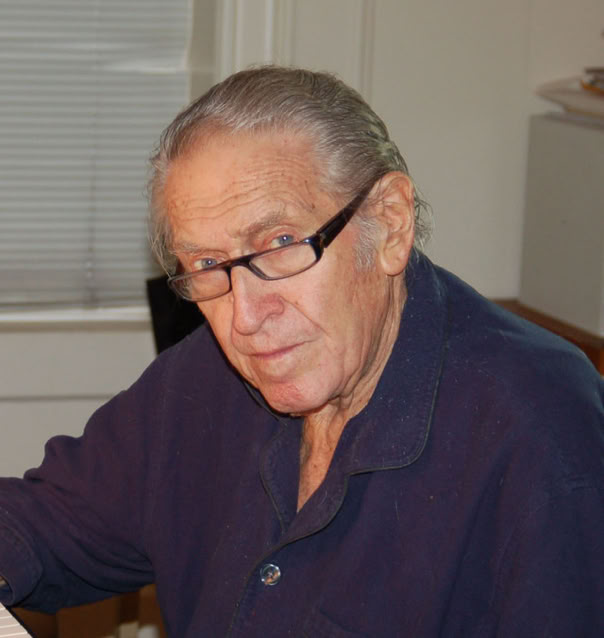
Leon Kirchner
Audio Player
COMMENTARY
John Adams:
A Musical Life
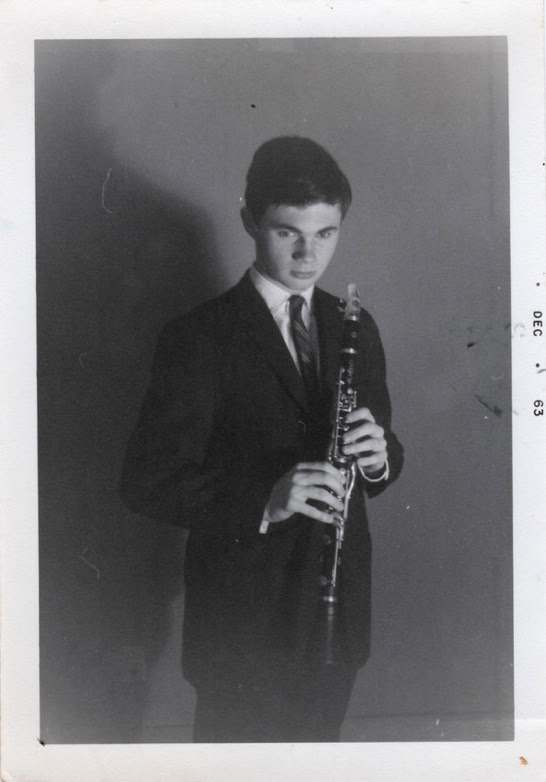
The young John Adams
John Adams: The Early Years (1947–1977)
From New England to Harvard
John Coolidge Adams was born on February 15, 1947, in Worcester, Massachusetts, and grew up in New England. Music was an integral part of his childhood: both of his parents were musicians, and his father taught him to play the clarinet. Adams demonstrated considerable musical talent at an early age, eventually performing with orchestras and developing an equally strong interest in composition.
He entered Harvard University, where he studied composition with several distinguished teachers, including Leon Kirchner, earning both bachelor's and master's degrees.
But the Harvard of the 1960s was not always a comfortable musical environment for the young composer. Much of the academic musical establishment embraced modernist techniques, including serialism and other highly structured approaches to composition.
Adams was increasingly dissatisfied with this musical world. He was searching for something that could reconnect contemporary composition with the directness, rhythmic vitality, and expressive power he found in other kinds of music.
Adams during his Harvard years
Audio Player
A Volkswagen, a Cross-Country Journey, and
San Francisco
In 1971, at the age of twenty-four, Adams left the East Coast and drove across the country in a dilapidated Volkswagen Beetle, eventually settling in San Francisco. He had arrived in one of the most exciting centers of artistic experimentation in America.
The Bay Area was still experiencing the aftereffects of the 1960s counterculture. Alternative lifestyles, experimental theater, electronic music, and unconventional approaches to art flourished. For a young composer eager to escape the restrictions of academic modernism, San Francisco offered extraordinary possibilities.
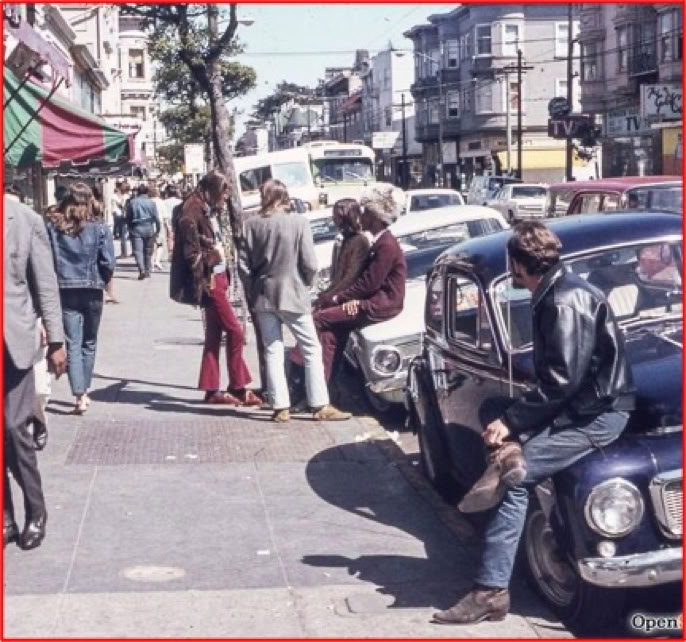
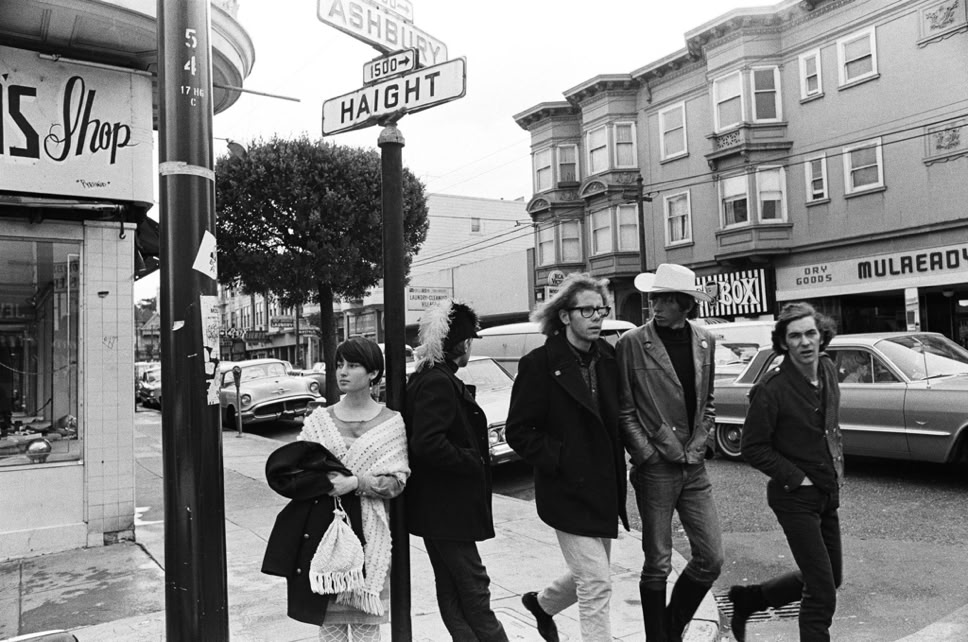
San Francisco in the early 1970s
And there was something particularly important happening in music.
Terry Riley had already created his groundbreaking In C (1964). Steve Reich had been developing compositions based on repetition and gradually shifting musical patterns. The San Francisco Tape Music Center had been an important center for experimental music.
In other words, Adams arrived in a city where many of the ideas associated with musical Minimalism had already taken root.
Enter Text
Audio Player
A Short Excerpt from Heavy Metal (1970)
Enter Text
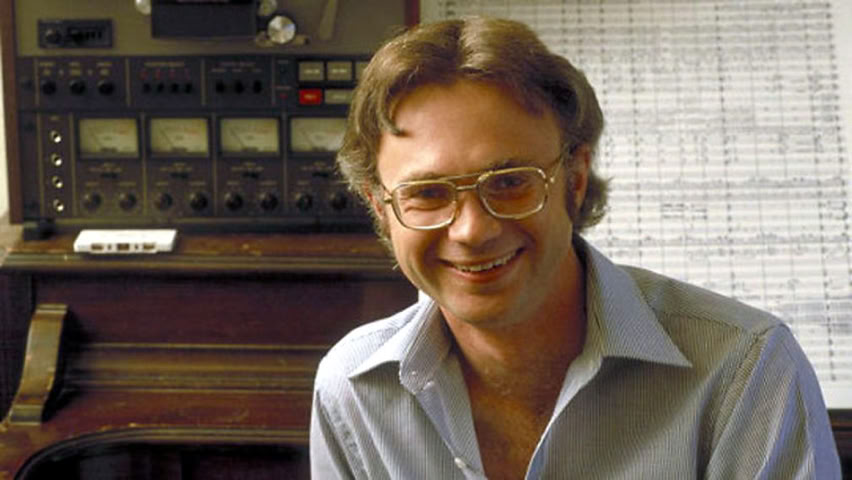
Haight-Ashbury in the early 1970s
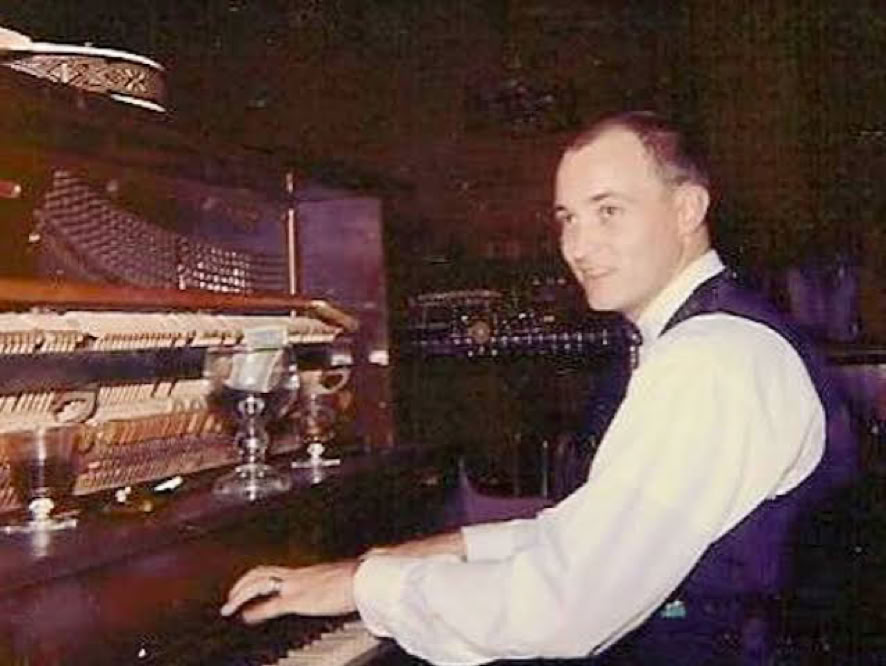
Terry Riley at the time of In C
Finding His Own Musical Language
Adams did not immediately become a Minimalist. During his first years in California, he experimented with electronic music, unconventional compositional techniques, and a variety of musical influences. His compositions from this period reveal an adventurous young musician exploring possibilities rather than committing himself to a single aesthetic. Among these early works were Heavy Metal (1970), American Standard (1973), and Christian Zeal and Activity (1973). The latter, part of American Standard, combines a slow-moving instrumental hymn with recorded speech, producing an unusual and sometimes unsettling musical experience.
Gradually, however, Adams became increasingly fascinated by several of the techniques associated with Minimalism: repeated musical figures, a clearly perceptible pulse, and patterns that change slowly over time. Yet he was never entirely satisfied with repetition for its own sake. His musical instincts increasingly drew him toward contrast, dramatic development, and a sense of movement toward a destination. By the late 1970s, these apparently competing impulses were beginning to come together.
John Adams in the 1970s
A Short Excerpt from Christian Zeal and Activity (1973)
The Breakthrough: Shaker Loops (1978)
After several years of musical experimentation, John Adams achieved his first major breakthrough in 1978 with Shaker Loops, originally composed for seven string instruments and subsequently arranged for string orchestra.
The work grew out of an earlier composition titled Wavemaker, in which Adams had experimented with rapidly repeated musical figures. Although dissatisfied with that piece, he recognized that its underlying musical ideas offered exciting possibilities.
The title Shaker Loops has two meanings. “Loops” refers to the short, rapidly repeated musical patterns that form the foundation of the composition. “Shaker” evokes both the physical trembling of the string instruments and the ecstatic shaking associated with the Shakers, a religious community known for its fervent worship.
From its opening moments, the music seems to vibrate with nervous energy. Rapidly repeated notes create a shimmering, pulsating texture, while gradually changing harmonies and overlapping musical figures produce an extraordinary sense of movement.
But Shaker Loops also reveals something that would become central to Adams's mature style: the music does not simply repeat—it develops, intensifies, and moves toward dramatic destinations.
Here, Adams began transforming the repetitive techniques of early Minimalism into a more expressive and dramatically compelling musical language.
Shaker Loops (1978) Movement I
Harmonielehre (1985): Minimalism Meets Romanticism
In 1985, John Adams composed Harmonielehre, a monumental work for large orchestra that marked a decisive turning point in his musical development.
The inspiration came from an extraordinary dream: Adams imagined an enormous oil tanker rising from the waters of San Francisco Bay and soaring into the sky. The work's explosive opening, with its thunderous orchestral chords, seems to capture something of that fantastic vision.
The title, German for “Theory of Harmony,” refers to Arnold Schoenberg's famous treatise on harmony. Yet the music itself represents Adams's renewed embrace of the rich harmonic language and expressive gestures of late Romanticism.
Here, the driving rhythms and repeated patterns of Minimalism coexist with a vast orchestral palette, sweeping melodies, and dramatic musical development.
Adams had not abandoned Minimalism—he had dramatically expanded its expressive possibilities.
With Harmonielehre, the composer who had begun his career experimenting with repetition and pulse demonstrated that these techniques could become the foundation for music of enormous emotional and symphonic power.
Adams conducts the opening of Harmonielehre
Adams conducts the final minutes of mvt. 1
The opera's success established Adams as a major figure in contemporary musical theater and opened the door to a remarkable series of subsequent operas.
Nixon in China (1987) History Becomes Opera
In 1987, John Adams achieved a remarkable breakthrough with his first opera, Nixon in China, created in collaboration with librettist Alice Goodman and stage director Peter Sellars.
The subject was extraordinary: President Richard Nixon's historic visit to Communist China in February 1972. After more than two decades of hostility between the two countries, Nixon became the first sitting American president to visit mainland China, meeting Mao Zedong and Premier Zhou Enlai.
Even more surprising was Adams's decision to turn this relatively recent political event into an opera. Many Americans could still vividly remember watching Nixon's arrival on television!
But Nixon in China was much more than a dramatization of a diplomatic encounter. Adams and his collaborators explored the personalities, ambitions, anxieties, and private emotions of the historical figures involved.
Musically, Adams combined Minimalism's driving rhythms and repeated patterns with lyrical writing, brilliant orchestration, and an increasingly theatrical sense of drama.


President Nixon during his historic 1972 visit to China.
John Adams on Nixon In China
The opening scene of Nixon In China (excerpt)
Adams discusses Road Movies
Augustin Hadelich performs “Relaxed Groove” from Road Movies
Andrew Anderson performs American Beserk
Beyond Minimalism: New Directions (1990s-2000s)
Following the success of Nixon in China, John Adams continued to expand his musical horizons, embracing an increasingly eclectic range of influences.
His second opera, The Death of Klinghoffer (1991), explored the 1985 hijacking of the cruise ship Achille Lauro, while subsequent operas addressed subjects ranging from the birth of Christ (El Niño, 2000) to the development of the atomic bomb (Doctor Atomic, 2005).
But Adams was hardly confined to the opera house.
In Road Movies (1995), for violin and piano, he explored the sensation of movement through space, combining rhythmic repetition with lyrical melodies and a distinctly American sense of open landscapes.
Then came American Berserk (2001), a wildly energetic piano work whose unpredictable rhythms, explosive gestures, and jazz-influenced character seem worlds away from the restrained simplicity of early Minimalism.
Yet beneath all this stylistic variety, one essential feature remained: Adams's fascination with rhythmic energy and the power of musical momentum.
Minimalism had given him a foundation. He was now building an entirely new musical world upon it.
Doctor Atomic (2005): Music at the Edge of Catastrophe
In 2005, John Adams turned to one of the most consequential events of the twentieth century: the development of the atomic bomb.
His opera Doctor Atomic, created with director Peter Sellars, focuses on physicist J. Robert Oppenheimer and the scientists preparing for the first nuclear test at Trinity, New Mexico, in July 1945.
Rather than simply recounting historical events, Adams explores the psychological and moral tensions confronting those involved: scientific achievement, fear, responsibility, and the terrifying uncertainty of what they were about to unleash.
The music is frequently explosive, rhythmically complex, and emotionally overwhelming. The relentless pulse of Adams's early Minimalism remains, but it now serves a dramatic language of extraordinary intensity.
In 2007, Adams drew upon the opera to create his Doctor Atomic Symphony, bringing this turbulent musical world into the concert hall.
Adams discusses Dr. Atomic
“Panic” from the Doctor Atomic Symphony — the violent electrical storm preceding the Trinity test.
One of the opera's most extraordinary moments comes when Oppenheimer, on the eve of the Trinity test, sings “Batter my heart,” a setting of John Donne's Holy Sonnet XIV. In this deeply personal meditation, scientific triumph gives way to fear, spiritual anguish, and an overwhelming sense of responsibility.
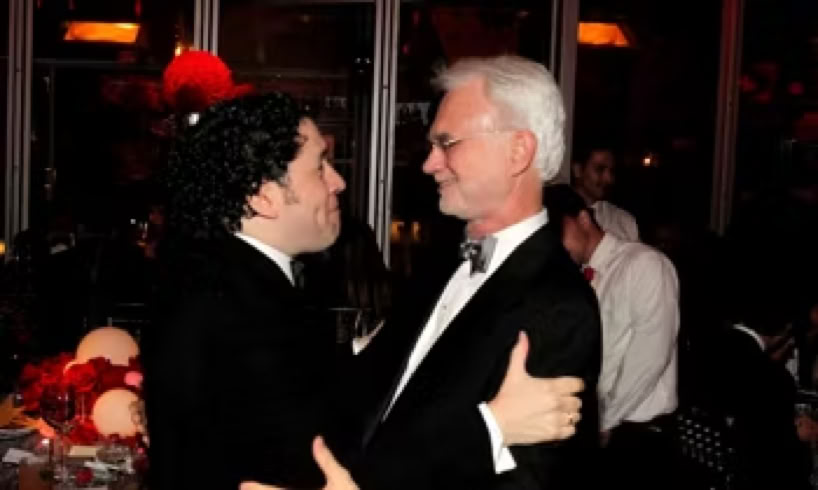
Gustavo Dudamel and John Adams
Yuja Wang at World Premiere of Must the Devil Have All the Good Tunes? With Gustavo Dudamel, conductor
Must the Devil Have All the Good Tunes? (2018): A Dazzling Finale
More than four decades after his earliest Minimalist experiments, John Adams was still discovering new musical possibilities.
His exuberant piano concerto, Must the Devil Have All the Good Tunes? (2018), written for the extraordinary pianist Yuja Wang, is a dazzling collision of rhythmic energy, jazz, popular music, and orchestral virtuosity.
The title comes from a remark traditionally attributed to Martin Luther, who supposedly wondered why the devil should have all the best music!
Here, Adams's unmistakable rhythmic drive propels us into a musical world of startling contrasts, unexpected turns, and sheer exuberance.
The composer who once explored the possibilities of repeating a few simple patterns had developed an astonishingly varied musical language.
And yet, beneath all the dazzling complexity, that irresistible pulse remains.
CONCLUSION
From Minimalism to Something Much Larger
John Adams began his musical journey exploring repetition, rhythmic pulse, and gradual transformation.
Over the decades, he absorbed an extraordinary variety of influences—Romanticism, jazz, popular music, opera, and the great orchestral traditions—and forged them into a musical language unmistakably his own.
The rhythmic energy of Minimalism never disappeared. Instead, it became the engine driving music of increasing dramatic, emotional, and expressive power.
Minimalism was John Adams's starting point. It was never his destination.