COMMENTARY
The Five Musical Characteristics of the Prokofiev “Style”
Audio Player
Prokofiev wrote voluminously about his life and his working method, and outlined very specifically five major characteristics of his work that he believed were either completely overlooked or misunderstood by critics. In this section, we look at these five characteristics (in his own words) and offer concrete examples of them at play in a number of his works.
1) The CLASSICAL
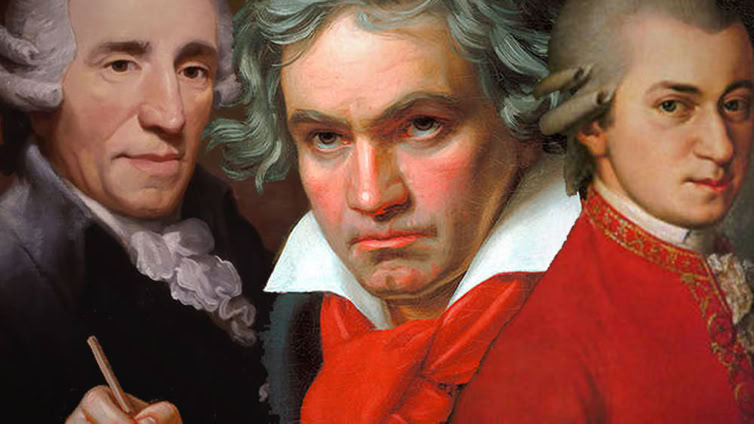
“The first was the Classical, born in my childhood when I hear my mother play Beethoven Sonatas. It took a neoclassic turn in my gavottes and sonatas.” When composing his Classical Symphony (1917), Prokofiev set himself a deliberate artistic challenge. “It seemed to me,” he wrote, “that if Haydn had lived into our day, he would have retained his own style while absorbing something of the new at the same time. I wanted to compose just such a symphony: a symphony in the classical style.” Determined to achieve clarity and balance, Prokofiev even avoided using the piano while writing the work, composing instead “in the old way,” so that the orchestral textures would remain transparent and proportioned in true eighteenth-century fashion. The result is not imitation but reinvention: classical elegance and symmetry enlivened by Prokofiev’s unmistakable harmonic bite, rhythmic vitality, and sly modern wit.
Audio Player
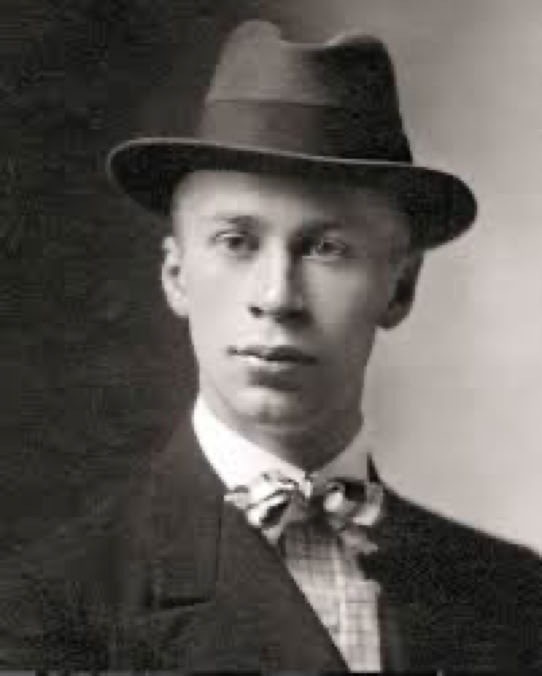
Prokofiev around the time of the Classical Symphony
Alondra de la Parra conducts the final movement of the Classical Symphony (1917)
Enter Text
2) INNOVATION
“The second is Innovation, which started after Taneyev’s mocking remark about my ‘much too simple’ harmony. At first it led to a search for harmonies to suit my own language, and later to a search for a language to express my strong emotions, as in The Ghost, Desperate, and Diabolical Suggestion. Although this search was mainly concerned with harmonization, it was also influential in the intonation of melodies.”
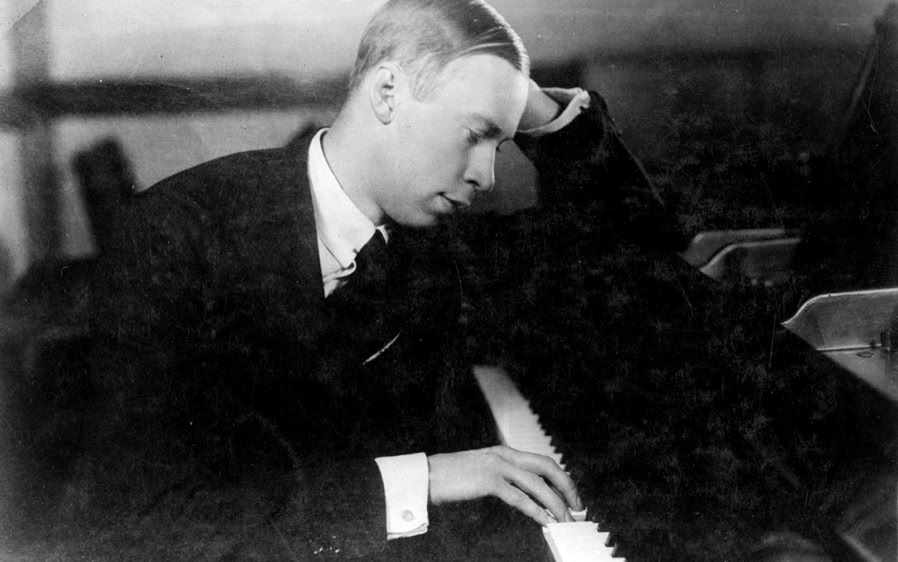
Prokofiev: one of the great pianists of the 20th Century
Audio Player
Enter Text
As with many composers (Beethoven, for instance), Prokofiev often used the piano when introducing innovations in harmony, melody, rhythm, etc. Here is his Suggestion Diabolique from 1908, when the composer was 17 years old.
3) TOCCATA-LIKE/MACHINE/MOTORLIKE
“The third—toccata- like character, or of you prefer to call it so, machine, or motorlike. This had its roots in Schumann’s Toccata, which made a great impression on me at the time and is expressed in my Etudes Op. 2, Toccata Op. 11, Scherzo (Op. 12), and in the Scherzo in the Second Piano Concerto. This characteristic is of less importance.”

Robert Schumann’s Toccata, which inspired Prokofiev’s own toccata-like writing.
Yuja Wang performing the brilliant Scherzo from Prokofiev’s Piano Concerto No. 2: the 16th notes never stop!!
The second movement of Prokofiev’s Symphony No. 5 is also a good example of toccata-like motoric writing, with continuous 8th notes for much of the movement
4) THE LYRICAL PRINCIPLE
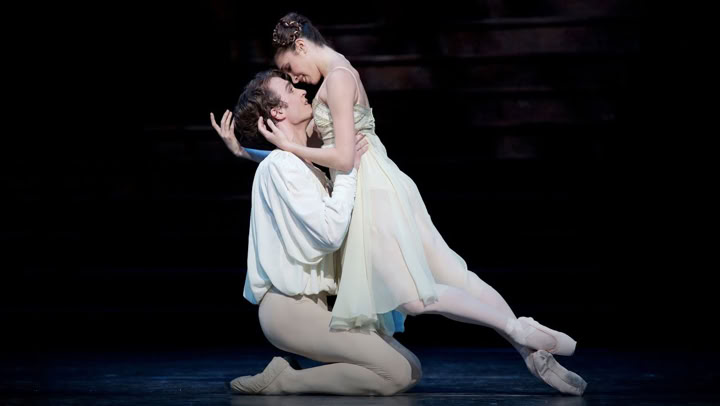
“The fourth—a lyrical principle, at first expressed as a feeling not bound to the melodies in my Fairy Tale (0p. 3), Dreams, Autumnal, and Legend (Op. 12). This characteristic was never noticed, or not until much later. For a long time, my critics denied me any lyricism, and without any encouragement it developed very slowly. But later I paid more attention to it.” It might be added that Prokofiev considered the lyrical element the most important element and least well-understood by critics and the public.
The Balcony Scene from the ballet Romeo and Juliet (1935, rev. 1940). One of the supreme examples of Prokofiev’s gift for melodic writing
The third movement from Prokofiev’s Symphony no. 5 contains some of Prokofiev’s most inspired lyrical writing.
…And how about the unforgettable melodies of Peter and the Wolf (1936)?
4) THE “GROTESQUE”
“I would like to limit the characteristics in the development of my creative ability to these four, and to consider the fifth, the so-called ‘grotesque’, as a sideline of the four. In fact, I am very much against this term ‘grotesque’, which in Russian is a mistranslation of the original French word. In referring to my work I would prefer to use ‘scherzando’, meaning simply an effort to express a joke, laughter, or mockery.”